Drylands Learning and Capacity Building Initiative
Community Land Act @10
Marking 10 years of Kenya's Community Land Act · 2016 – 2026
67%
of Kenya's landmass
6–10M
Kenyans on community land
14%
group ranches titled
4
trust lands fully titled
2.5%
trust land completion rate
The Scale of the Issue
Community land is not marginal — it is the majority of Kenya. Yet it remains the least protected, least registered, and most vulnerable to dispossession.
scale1.jpgscale2.jpgscale3.jpg
Land area
67%
of Kenya's total landmass is community land — approx. 150,000 sq miles
Population
6–10M
Kenyans live on and depend on community land for their livelihoods
Economy
80%
of Kenya's export earnings are supported by activities on community land
Employment
70%
of wage employment connected to agriculture and pastoralism on community land
🌍
Most community land holders are members of pastoral, indigenous, and rural communities — Kenya's most economically marginalized populations.
⚠️
A decade after the Community Land Act was passed, the overwhelming majority of this land remains legally unregistered and unprotected.
📍
Community land spans 24 counties — from Turkana and Marsabit in the north to Kilifi and Kwale on the coast.
Kenya made landmark constitutional and legislative commitments to community land rights. A decade on, the gap between the law on paper and reality on the ground remains vast.
law1.jpglaw2.jpg
📜
Constitution of Kenya (2010), Article 63 — formally recognized community land as a distinct, protected category of land ownership for the first time.
📋
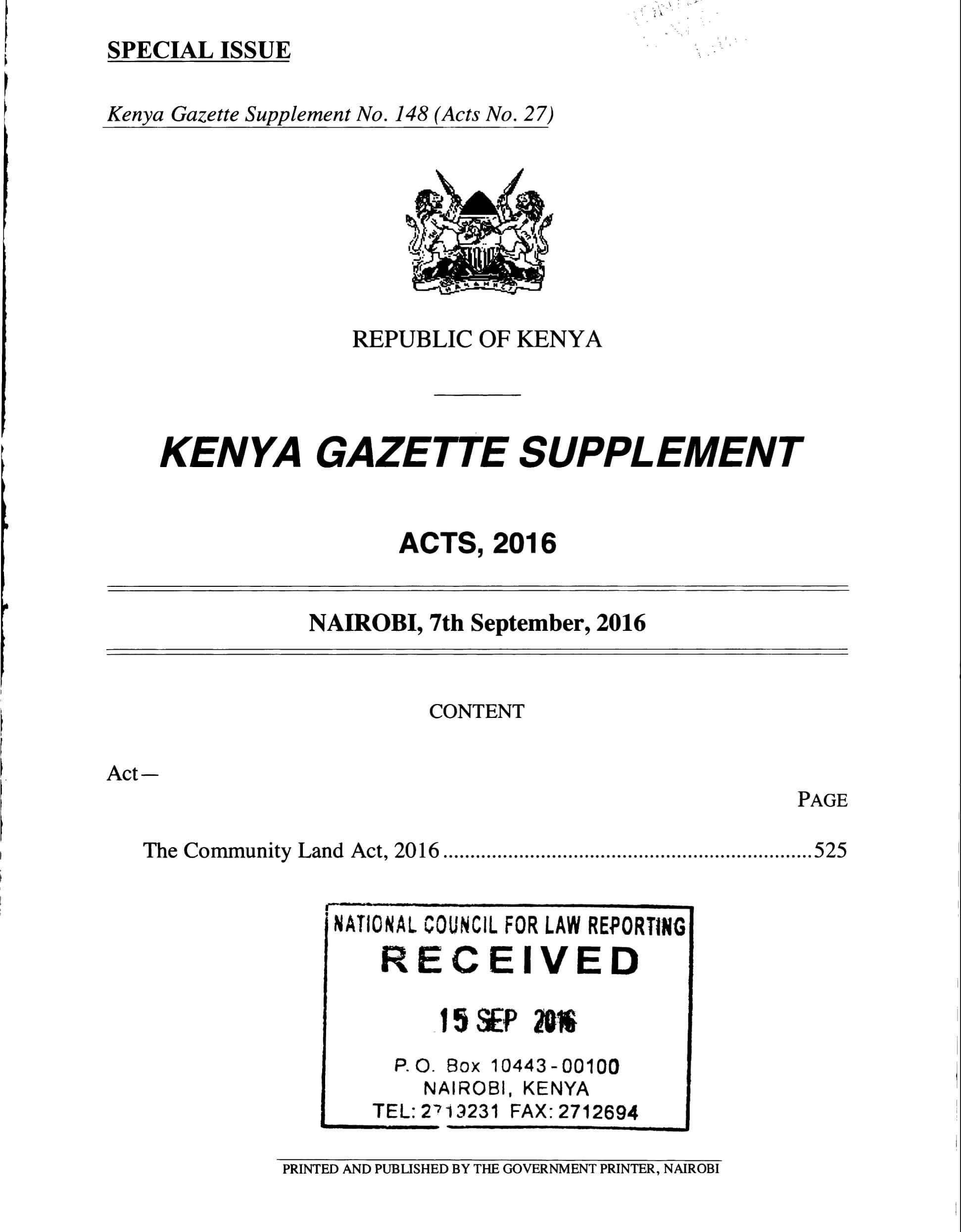
Community Land Act No. 27 of 2016 — enacted to operationalize Article 63. Gave communities a legal pathway to register, own, and self-govern their land collectively.
⏱️
The Act required the transition process to begin within 12 months of gazettement of its regulations. That deadline passed years ago with no national enforcement.
🏛️
The Act promised communities the right to form Community Land Management Committees (CLMCs), adopt bylaws, and receive formal title deeds.
🔧
NLC (Amendment) Act, 2025 — strengthens NLC oversight and requires review of all public land grants issued before 27 August 2010, with power to revoke irregular allocations.
🚨
10 years on: the law exists. The land does not yet belong to the people it was written for.
The national average transition rate, standing at 15% as of July 2023, is slow — seven years after the enactment of the Community Land Act.
— NLC-Namati Joint Monitoring Report, October 2023
315 former group ranches must formally dissolve and re-register as titled community land. As of July 2023, only 46 — just 14% — have completed the full process.
group1.jpggroup2.jpggroup3.jpg
Total pipeline
315
former group ranches across 24 counties
Fully titled
46
group ranches have completed full transition as of July 2023
Still stuck
269
group ranches remain unregistered — 85% of the entire pipeline
Completion rate
14%
national transition rate — seven years after the Act was passed
Progress by County
Narok0% — 239 unresolved
Largest single backlog in Kenya. None resolved as of 2023.
Samburu46% — 21 titled
Best performing county on group ranches. Also leads on trust land titling.
Laikipia50% — 13 titled
West Pokot42% — 5 titled
Kajiado~8% — 2 titled
Top Barriers to Registration
⚡
Internal conflicts among group members — cited in 39.7% of cases.
💸
Financial constraints — communities cannot afford survey, adjudication, and legal costs. Cited in 22.5% of cases.
📢
Lack of information on the transition process — cited in 20.6% of cases.
🗂️
Registration procedural challenges — bureaucratic bottlenecks and delays — cited in 17.2% of cases.
The larger and historically harder track. ASAL counties held under the Trust Land Act must follow a separate adjudication process. A decade in, only 4 communities have a title deed.
trust1.jpgtrust2.jpgtrust3.jpg
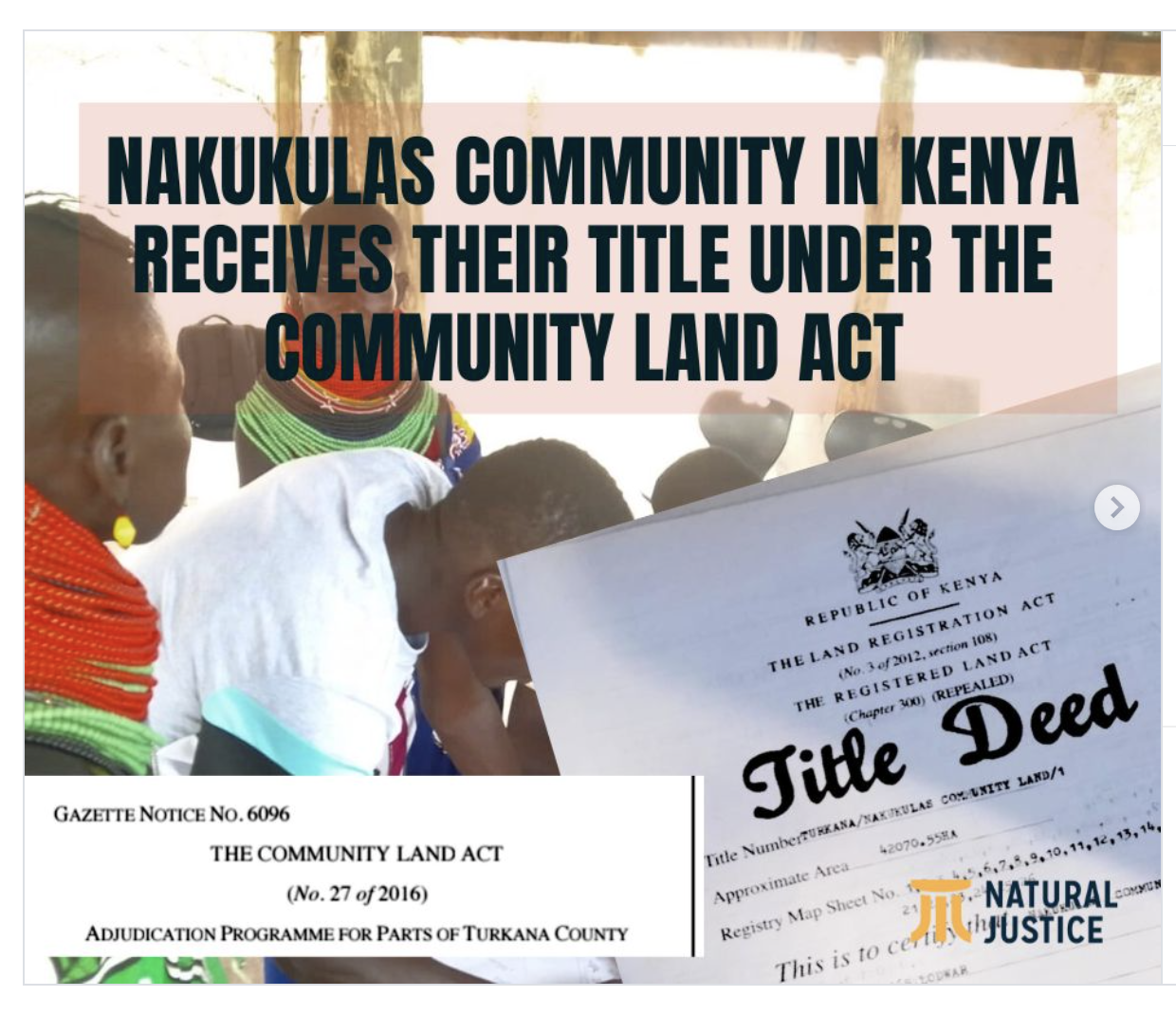
Updated — May 2026: Confirmed fully titled former trust land communities now stands at 4, following verification of Kamuthe (Garissa, 2023), Nairimirimo (Samburu, 27–28 Feb 2023), Arisim (Samburu, 27–28 Feb 2023), and Nakukulas (Turkana, 27 Feb 2025). This represents a 2.5% completion rate against 159 identified parcels — a decade after the Act was passed.
Counties covered
24
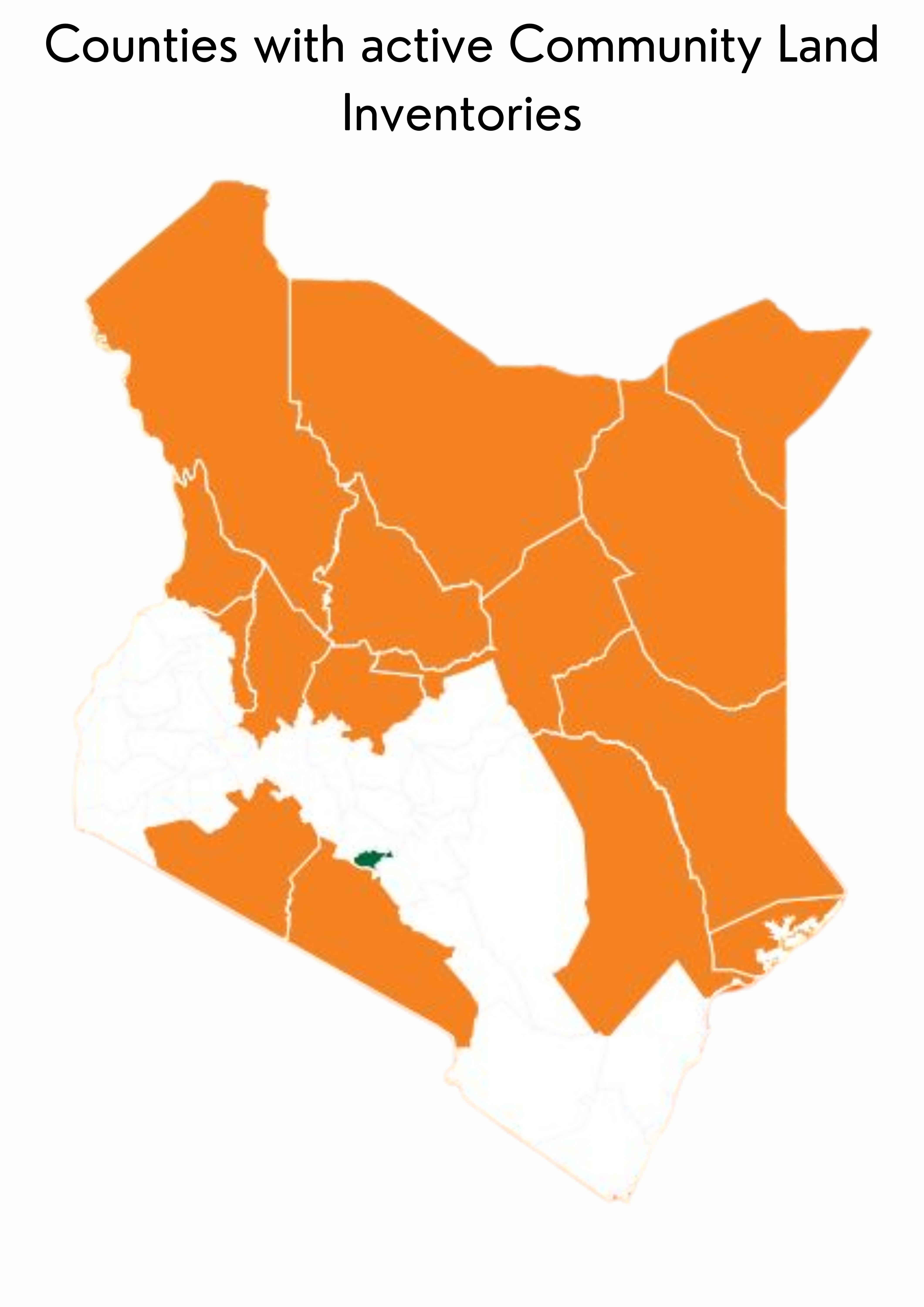
counties have community land; only 13 have submitted the required inventories
Parcels identified
159
unregistered community land parcels identified across submitted inventories
Fully titled
4
confirmed fully titled former trust land communities — 2.5% of identified parcels
The 4 Confirmed Titled Trust Land Communities
1
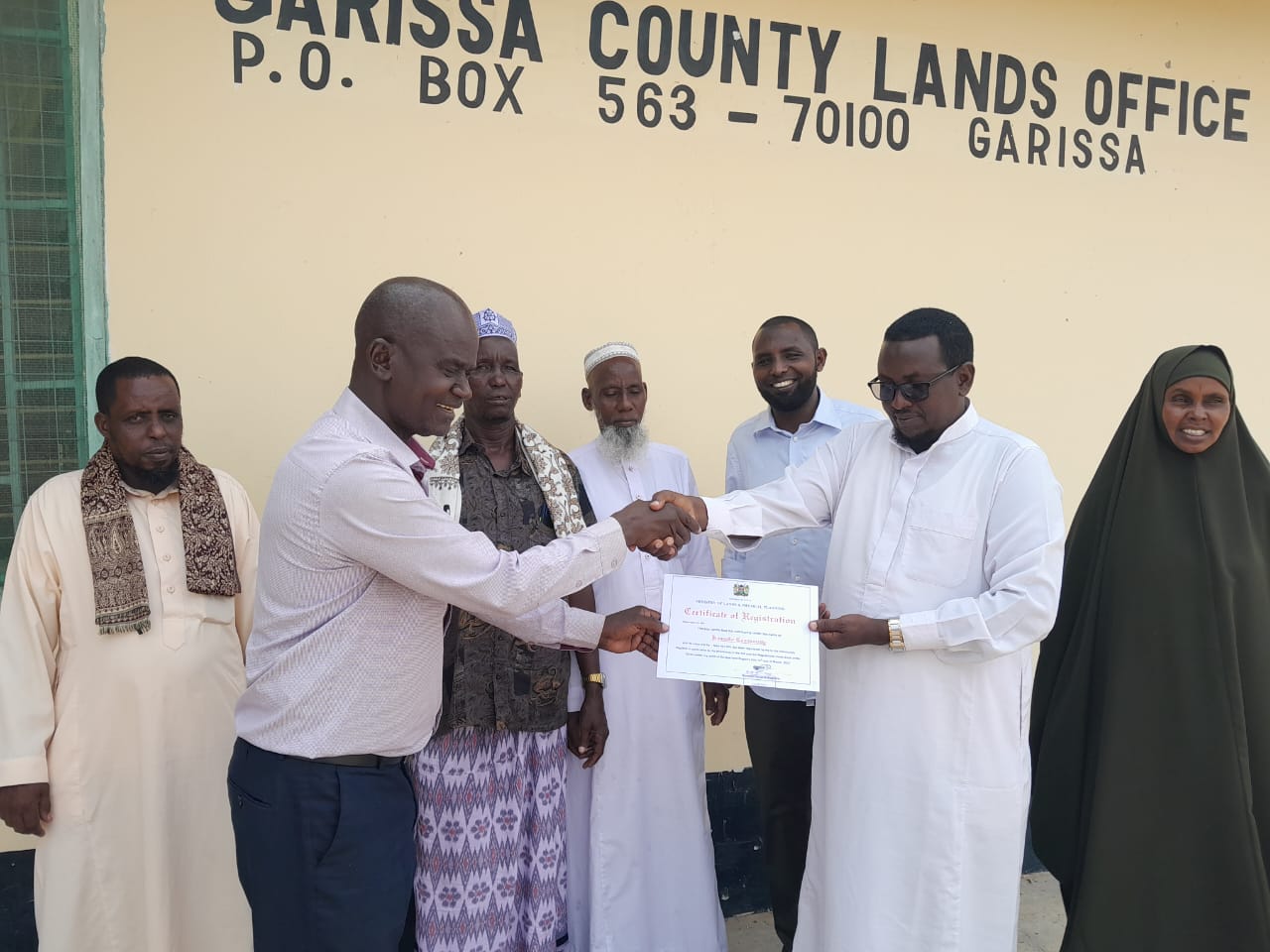
Kamuthe
📍 Garissa County
Titled 2023 · 31,000 ha. First trust land community in Kenya to be titled. Supported by DLCI and FCDC. Community land title remains valid following 2025 court ruling.
✓ Confirmed Titled
2
Nairimirimo
📍 Samburu County
Titled 27–28 Feb 2023. Pastoral community in Samburu East. Supported by DLCI and FCDC.
✓ Confirmed Titled
3
Arisim
📍 Samburu County
Titled 27–28 Feb 2023. Registered same period as Nairimirimo. Supported by DLCI and FCDC.
✓ Confirmed Titled
4
Nakukulas
📍 Turkana County
Titled 27 Feb 2025 · 42,070 ha. First title deed in an active oilfield. 8-year process (2017–2025).
Kenya's Constitution and the Community Land Act both guarantee women's land rights. Neither is being implemented. The exclusion of women is happening invisibly — and in some places, deliberately.
gender1.jpggender2.jpg
Individual title
3%
of women hold individual land title deeds (KDHS 2022)
Titles 2013–2017
10.3%
of all title deeds issued went to women — just 1.62% of total land acreage
Joint ownership
20%
of women have joint ownership with a spouse — not independent ownership
Some ASAL areas
1–2%
women's land ownership rate in some ASAL areas, per NLC data
📜
The law is clear: Constitution Articles 27 & 60 guarantee gender equality in land. The Community Land Act mandates at least one-third women representation in all CLMCs.
🚫
Reality: A Kenya Land Alliance audit found that none of the community land inventories submitted by counties contain gender-disaggregated data.
🚫
In Laikipia's Ilipolei community, women have reported being physically barred from community assembly meetings — the very meetings that determine land governance.
None of the community land inventories submitted by counties contain gender-disaggregated data — making it impossible to track women's involvement or ensure their rights are protected.
Every year of delayed registration opens new frontiers of dispossession. Carbon markets, extractives, and conservation projects are racing ahead of community rights.
threats1.jpgthreats2.jpg
Carbon Markets
🌿
Kenya's vast unregistered rangelands are being targeted for carbon offset projects — without community consent or defined legal rights to carbon revenues.
⚖️
January 2025: The Environment and Land Court in Isiolo ruled that conservancies were established without adequate community participation on unregistered community land.
📋
Kenya's new climate regulations do not yet define carbon rights — leaving communities legally exposed.
Extractives & Infrastructure
🛢️
LAPSSET corridor, oil in Turkana, conservation projects — are proceeding on unregistered community land. The Nakukulas case shows communities can lose a decade of resource benefits without a title.
🏗️
Unregistered community land has no legal protection against alienation.
Conservation Capture
🦁
September 2025: The High Court revoked the Kamuthe Wildlife Conservancy licence in Garissa, finding it was established without adequate public participation. The community land title itself remains valid — proving proper process protects communities. → Daily Nation
Kenya's first trust land community to receive a title deed. Supported by DLCI and FCDC, the Kamuthe registration set the national precedent — proving the journey from colonial-era trust land to full community ownership is possible.
kamuthe1.jpgkamuthe2.jpgkamuthe3.jpgkamuthe4.jpg
Key PartnersDLCI — Drylands Learning & Capacity Building Initiative |
FCDC — Frontier Counties Development Council |
Garissa County GovernmentDLCI and FCDC supported the community through advocacy, capacity building, and coordination with the national land registration process.
Featured Case · Fafi Constituency · Garissa County · #1 of 4 Confirmed Trust Land Titles in Kenya
Kamuthe — Where It All Began
Located approximately 40 kilometres southeast of Garissa town along the Garissa-Lamu Road, Kamuthe is a community of pastoralists and farmers with a population of 8,661. For generations, this community resided on land that was legally not recognised as their own. Under the colonial-era trust land arrangement, Garissa County Government held the land on the community's behalf — significantly limiting their authority over their ancestral territory and blocking development opportunities.
In 2021, with support from DLCI and FCDC, the community embarked on the registration process under the Community Land Act 2016. The journey included community mobilisation, CLMC formation, public participation, adjudication, survey, and final gazettement. In 2023, Kamuthe made history: it became the first former trust land in Kenya to successfully transition to registered community land — gaining full legal ownership of 31,000 hectares.
The registration followed due process at every stage. This was later confirmed by the Environment and Land Court in September 2025, which stated: "the registration of Kamuthe community under the Act cannot be faulted as it was evident that due process was followed." While the KWS licence for a wildlife conservancy on Kamuthe land was revoked for lack of public participation, the community land title stands — a distinction that matters deeply for Kenya's registration movement.
2021
Registration journey began
2023
Title deed issued
31,000 ha
Total area titled
8,661
Community population
#1
First in Kenya
Why Kamuthe Was Stuck — The Challenges Before Registration
🗺️
Colonial-era trust land: Garissa County Government legally held the land — the community could not make binding decisions about their own territory.
⛏️
Illegal mining and land grabbing: The absence of formal security allowed outside actors to exploit resources and grab land with impunity.
💧
Resource conflicts: Recurring disputes over water and pasture, exacerbated by encroachment from outside the community.
💰
Information asymmetry: The community was excluded from economic benefits derived from their own land — including compensation for resource extraction.
What Registration Unlocked
✅
Full legal ownership of 31,000 hectares — the county government's trustee role has ceased.
✅
A 10-year Land Use Plan (2024–2034) launched with USAID/KWCA support — balancing farming, conservation, and pastoralism.
✅
Kamuthe became a national benchmarking site — communities from Garbatula, Kina and Sericho visited in May 2025 to learn from the process.
✅
The court ruling affirming the validity of registration under due process strengthens the legal protection of all communities that follow proper procedure.
The Court Ruling — September 2025
⚖️
The Environment and Land Court revoked the KWS licence for Kamuthe Wildlife Conservancy — ruling it was established without adequate public participation. → Daily Nation
✅
Critically, the court upheld the community land registration itself — explicitly stating due process was followed. The title remains valid.
📌
The ruling is a landmark for Kenya: it shows that conservation and extractive projects on community land must go through community approval — and that a strong title deed protects communities from being bypassed.
At the heart of this initiative and achievement is DLCI, which collaborates with various CSOs, county governments, and the Ministry of Land. The first beacon of this transformation was lit in Garissa County, where the Kamuthe community became the first former trust land group to receive a community title deed.
The most documented of the 4 confirmed trust land registrations. It took 8 years. The community sits on an oilfield. And the battle did not end with the title deed.
nakukulas1.jpgnakukulas2.jpgnakukulas3.jpg
Featured Case · Turkana East Constituency · #4 of 4 Confirmed Trust Land Titles
Nakukulas — The First Title Deed in an Oilfield
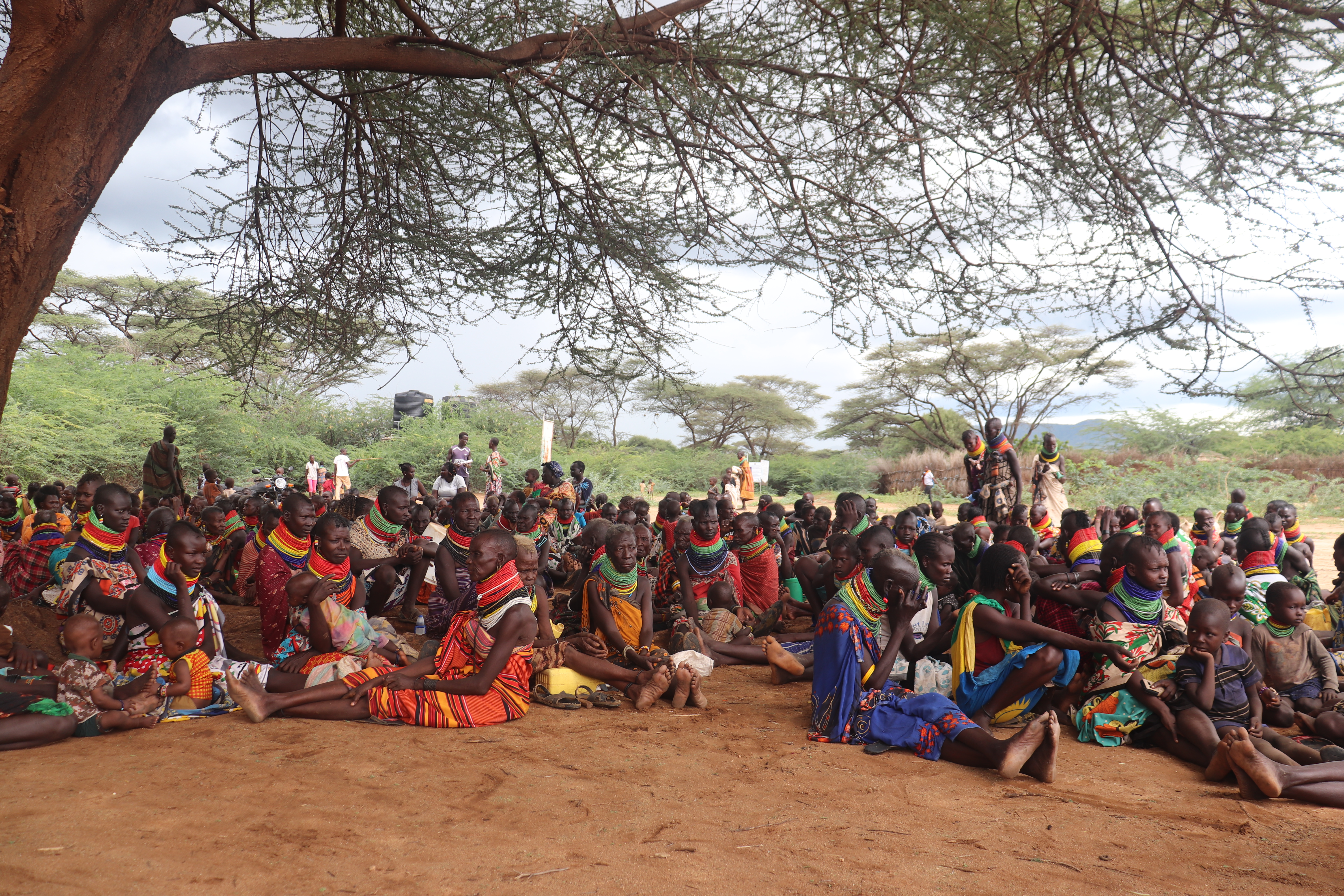
Nakukulas is a pastoral community in Turkana East whose ancestral land sits in the South Lokichar Basin — the same land where Tullow Oil discovered oil at the Ngamia-1 well in 2012. For over a decade, oil was extracted from their land while they had no legal standing to claim compensation, negotiate terms, or demand a share of revenues.
Registration began in 2017. The title deed was issued on February 27, 2025. The formal celebration was held on May 1, 2025 in Nakukulas village. Supported by Natural Justice, Turkana Extractives Consortium, Kenya Oil and Gas Working Group, and Pamoja Trust.
8 yrs
Start to title deed
42,070 ha
Total area titled
15
CLMC officials
2012
Oil discovered
What Changed With the Title
✅
The community is now legally recognized as both an entity and an owner.
✅
In cases of compulsory land acquisition, the community will now be compensated directly.
✅
The community can now negotiate directly with oil investors as a recognized landowner.
What the Title Did Not Resolve
⚠️
A 2025 court case reveals the county government refuses to relinquish trustee powers even after title was issued. → Kenya Law
⚠️
Lease revenues are allegedly being channelled into county budgets rather than to the communities.
Graves of our relatives — our primary evidence of land ownership — were not enough to negotiate compensation for land used for petroleum activities.
Senior officials have acknowledged the failure publicly. Commitments have been made. Structural resourcing and political will to close the gap remain absent.
govt1.jpggovt2.jpg
🏛️
PS for Lands Nixon Korir at the October 2023 NLC-Namati report launch: acknowledged the process as "slow and inadequately resourced" and committed to channelling resources toward implementing the Community Land Act.
🏛️
NLC Chairperson Gershom Otachi: said 14% "shows we are doing something but should do more" — calling for targeted sensitisation and adequate financial and human resource allocation.
📋
NLC (Amendment) Act, 2025: Strengthens NLC powers and requires review of all public land grants issued before 27 August 2010.
✊
Community response — November 2024: The Community Land Owners Association of Kenya (CLOAK) staged a protest march in Nairobi, presenting a petition to the National Assembly demanding MPs act on registration delays.
14% shows we are doing something but should do more. We need targeted, all-inclusive sensitisation and adequate financial and human resource allocation to achieve 100% transition.
Seven concrete asks for the Community Land @10 campaign — grounded in verified data and actionable within Kenya's existing legal and policy framework.
1
Register all 315 group ranches by 2027
Set a binding national deadline with quarterly public reporting on progress by county.
2
All 24 counties must submit inventories
Immediately — with mandatory gender-disaggregated data in every submission.
3
Deploy dedicated land registrars to ASAL counties
Communities cannot be expected to travel to neighbouring counties for services.
4
Define carbon rights in law — now
Before any new carbon project proceeds on unregistered community land.
5
Enforce one-third women's representation
In all CLMCs — with independent verification mechanisms, not self-reporting.
6
Adequately fund community land registration
The full cost of registration cannot continue to fall on communities with zero resources.
7
Publish a live national register
Of all community land applications, statuses, and title deeds issued — publicly accessible, updated quarterly.
Sources & Data Credibility
All figures reflect the most recent publicly available data as of May 2026. Where the government has not published data, that absence is itself noted as a governance issue.
★ The government has not published a live national registry of community land registration status. All figures are compiled from NGO reports, court records, investigative journalism, and DLCI campaign repository verification. This data gap is itself a campaign issue — see Demand #7.
★★ DLCI and FCDC roles in supporting Kamuthe, Nairimirimo, and Arisim registrations confirmed via DLCI July 2025 and DLCI campaign repository, May 2026.